For most of human history, housing was not an abstract investment vehicle. It was a social technology: a way to organize care, labor, protection, learning, and coexistence. Only recently, historically speaking, did housing become something one primarily buys, finances, optimizes, and extracts value from, rather than something one builds, adapts, and inhabits collectively.
This shift has consequences. Worldwide, housing is increasingly inaccessible not because we lack space, materials, or knowledge, but because we have built a system so over-engineered, regulated, financialized, and professionalized that ordinary people are structurally excluded from shaping the places they live in. What was once a civic right is now treated as a speculative asset; what was once a social practice has become a technocratic pipeline.
Much of this over-engineering did not emerge from bad intentions. Zoning laws, fire classifications, building use categories, and height limits were introduced to address very real historical risks: overcrowding, fire disasters, industrial pollution, speculative slums, and unsafe construction. Separating residential from commercial use, classifying buildings by fire resistance, limiting height or floor count, and defining what constitutes a “dwelling” all made sense in a period when cities were growing rapidly and enforcement capacity was limited.
The problem is not that these rules exist, but that they hardened into threshold systems. Once a building crosses a line, two floors instead of one, multiple apartments instead of a single household, a certain height, a specific fire class, it is no longer evaluated on actual risk, material reality, or social use, but on category membership. In Finland, a building classified as P3, for example, is treated as P3 regardless of context, supervision, construction detail, or community governance. Safety becomes abstracted from lived conditions and reduced to compliance with predefined types.
Over time, these categorical thresholds aligned closely with financial interests. Standardized building types are easier to insure, finance, value, and trade. Banks, insurers, and large developers learned to operate efficiently within fixed classifications, while hybrid, experimental, or community-driven projects became anomalies, too complex to fit templates, too risky to price, too inconvenient to approve. Regulation, finance, and professional specialization began reinforcing one another. What started as protection gradually became exclusion.
This is where the notion of over-engineering is often misunderstood. The problem is not excessive complexity, but the wrong kind of complexity. Contemporary building regulation is complex in rules, yet simplistic in logic: rigid categories, fixed thresholds, and one-time approvals dominate a system meant to govern living, evolving environments.
From the perspective of systems theory, this represents a closed system struggling to control uncertainty by freezing it. Safety is pursued by eliminating variation rather than by managing it. Yet complex social systems rarely become safer through simplification alone. They become safer through adaptive regulation: feedback loops, contextual evaluation, shared responsibility, and continuous adjustment.
In other words, escaping over-engineering does not require abandoning regulation, nor returning to an imagined pre-regulatory past. It requires adding a different layer of complexity, one that allows freedom and safety to coexist. This means shifting from static categories to dynamic assessment, from threshold traps to gradients, from one-off compliance to ongoing governance. It is precisely in this space that new models of housing must operate.
Gamified Cohousing emerged from within this contradiction, not as an aesthetic experiment, nor as a utopian gesture, but as a pragmatic response to a system that no longer works.
I write this as an architect and civil engineer who has worked in over twenty countries and participated in the realization of more than fifty buildings. That experience has made one thing painfully clear: architecture is rarely neutral. It either enables participation, adaptability, and social resilience, or it quietly enforces exclusion, dependency, and rigidity.
Architecture is often described as the art of dividing space. In reality, it is the art of structuring human interaction. Buildings do not exist in isolation; they frame tasks, relationships, conflicts, routines, and economies. Yet despite society changing rapidly, culturally, technologically, demographically, architecture has become increasingly static. We still design as if people’s lives were predictable, stable, and professionally managed from above.
This raises uncomfortable questions. Is this rigidity merely a byproduct of capitalism? Or does it run deeper, into our fear of uncertainty, our obsession with control, our mistrust of collective agency? Why do we continue to design buildings around fixed “functions,” instead of around evolving tasks, shared responsibilities, and negotiated use?
Vitruvius famously defined architecture through three pillars: firmitas (durability), utilitas (function), and venustas (beauty). Two thousand years later, these terms still circulate, often emptied of their original meaning. Reinterpreted today, they point not toward monumental form, but toward social intelligence.
Durability can no longer mean only structural permanence. A building that physically stands for centuries but socially fails within a decade is not durable, it is obsolete. True firmitas today is social resilience: the capacity of a building and its community to adapt to changing lives, needs, and relationships.
Functionality can no longer be reduced to technical performance alone. A perfectly insulated, digitally optimized building that accelerates resource extraction and social isolation is functionally deficient. Contemporary utilitas must be ecological, minimizing environmental harm while maximizing meaningful use.
And beauty, venustas, is not a façade problem. Beauty is what makes people care. It is what encourages stewardship, cooperation, creativity, and belonging. A space that supports dignity, mutual respect, and everyday joy is far more beautiful than any iconic object detached from lived reality.
Gamified Cohousing grew out of this reinterpretation. It is not a typology, but a method: a way of reusing abandoned buildings and re-embedding them into local social and economic life. It treats architecture not as a finished product, but as an evolving framework, one that balances private life with shared responsibility, and autonomy with interdependence.
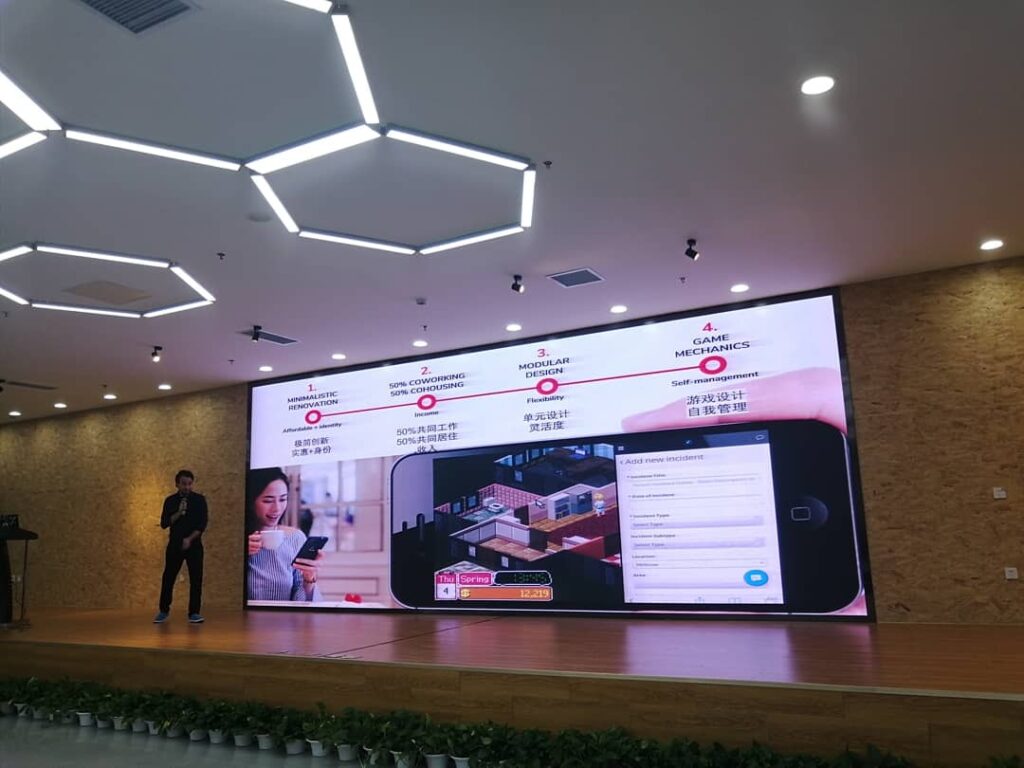
At its core, the model rests on a few simple but radical principles: renovating existing buildings with the lowest possible environmental impact; using modular and reversible design instead of permanent over-specification; combining living and working spaces to reduce spatial and economic redundancy; and introducing gamified self-management to make participation visible, fair, and engaging from day zero.
The last point often raises eyebrows. Gamification here does not mean infantilization or control. It is a governance tool. In Gamified Cohousing, residents can reduce their housing costs by contributing time, skills, and care to the community. Tasks that are usually invisible, maintenance, coordination, mutual help, become recognized and rewarded. Housing becomes not a passive service, but a shared economy.
This approach deliberately avoids the illusion that architecture alone can “solve” social life. Traditional cohousing discourse often focuses on spatial optimization, daylight, circulation, room proportions, as if better layouts could guarantee better communities. But human interaction is not static. It varies across cultures, generations, power structures, and time. No fixed design can anticipate this.
What Gamified Cohousing proposes instead is adaptability as a system property. Rather than prescribing behavior, it creates conditions for continuous adjustment, through modular space, shared governance, and feedback loops embedded in everyday life. Architecture becomes less of a script and more of an interface.
Communal living itself is not new. Long before modern cohousing emerged in Denmark through figures like Jan Gudmand-Høyer or practices like Vandkunsten, humans lived collectively in monasteries, farmsteads, workshops, Epicurean communities, and countless other shared arrangements. Individualized housing is the historical exception, not the norm.
What is new is the scale of alienation produced by contemporary housing systems, and the degree to which people are prevented from influencing their own environments. Sociologist Richard Sennett’s notion of “seed planning” is useful here: architecture should leave room for growth, improvisation, and change, rather than freezing social life into a single imagined future.
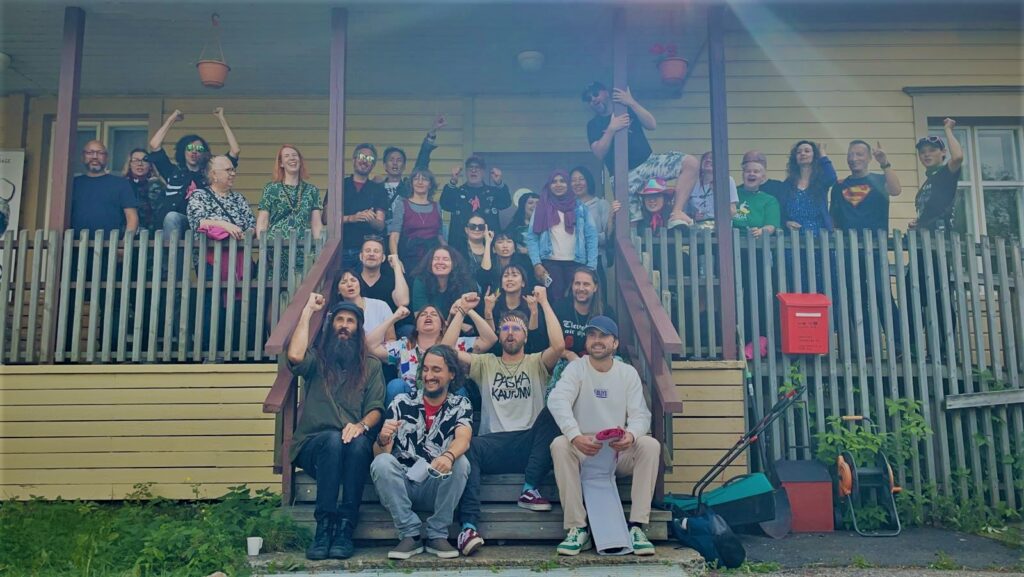
Finland, with its strong renovation culture and growing interest in communal living, offered a fertile ground to test this in practice. Gamified Cohousing currently operates six projects, in Lohja, Oulu, Kajaani, Lappeenranta, Kannus and Kathmandu most of them in historically significant buildings that would otherwise face decay or demolition.
The first serious attempt emerged in 2016–2017 with experiments in Svartsa Skola in Porvoo, followed by the more consequential pilot at Hyrsylän Koulu, an abandoned school near Helsinki. That project was not born from a master plan, but from necessity, and from failure. The earlier acquisition attempt in Porvoo collapsed due to the immaturity of the concept. In hindsight, that failure was essential. The model needed to be tested, questioned, and stripped of naïveté.
Unexpectedly, a startup accelerator became a turning point. Through programs like Helsinki Think Company, Mutiny, and Ultrahack, the project was forced into clarity. Ideas that had lived comfortably in academic language had to be expressed in three-minute pitches. Social ambition had to meet operational logic. The result was not dilution, but precision.
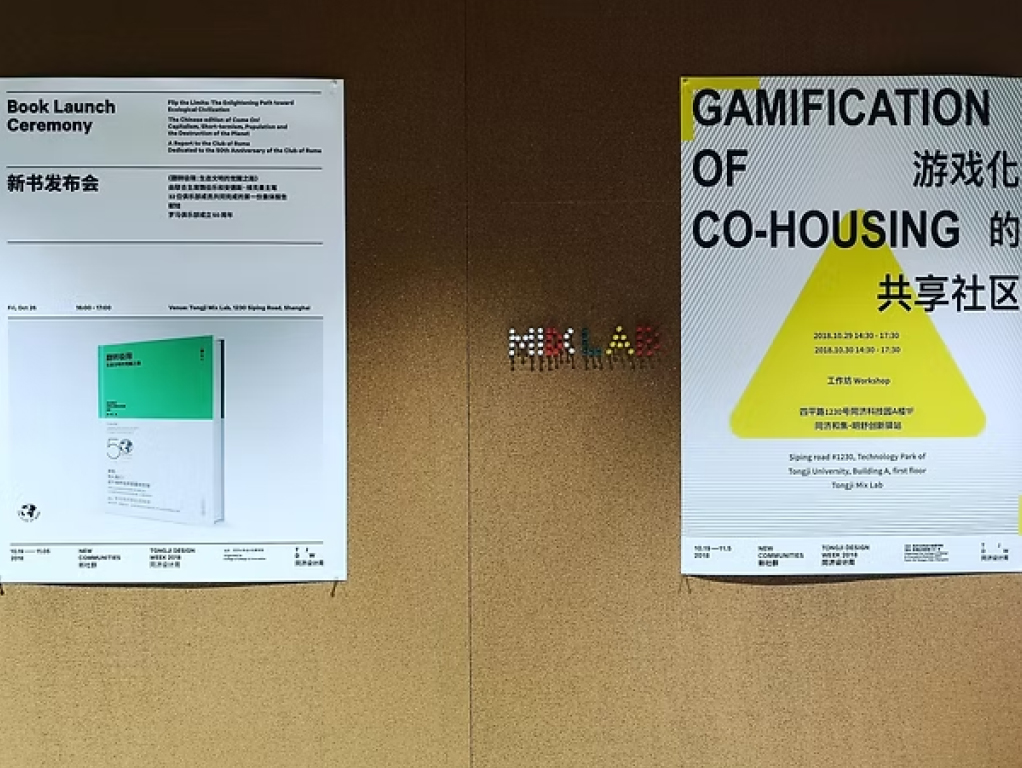
By 2019, Gamified Cohousing had become a structured initiative, with dedicated companies for software, real estate, and property ownership; completed structural surveys; public presentations in Moscow, Venice, Beijing, and Shanghai; and an evolving masterplan balancing renovation with selective new construction.
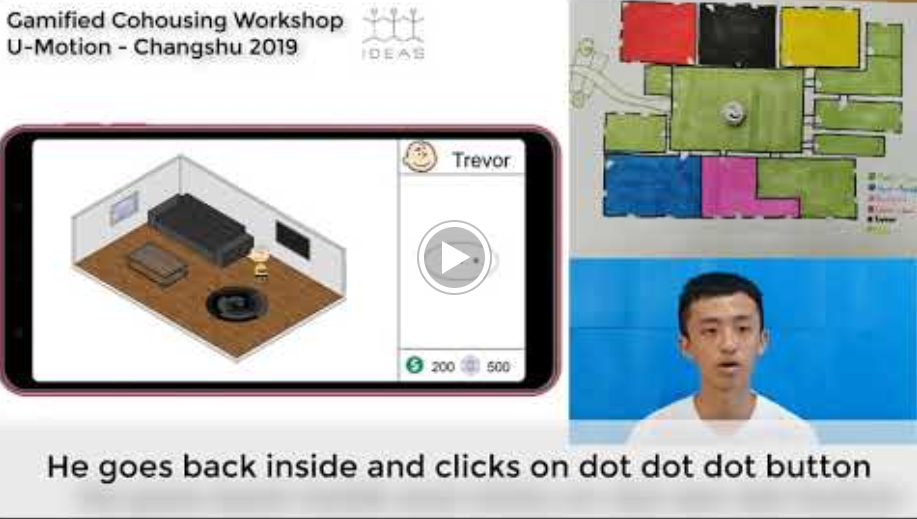
Alongside built work, talks and workshops played a crucial role. This was not self-promotion, but stress-testing. Presenting the concept in universities, conferences, and community workshops exposed it to critique, adaptation, and reinterpretation. Workshops with schoolchildren in China, for example, revealed how intuitively young people grasp collective governance when given the tools to imagine it.
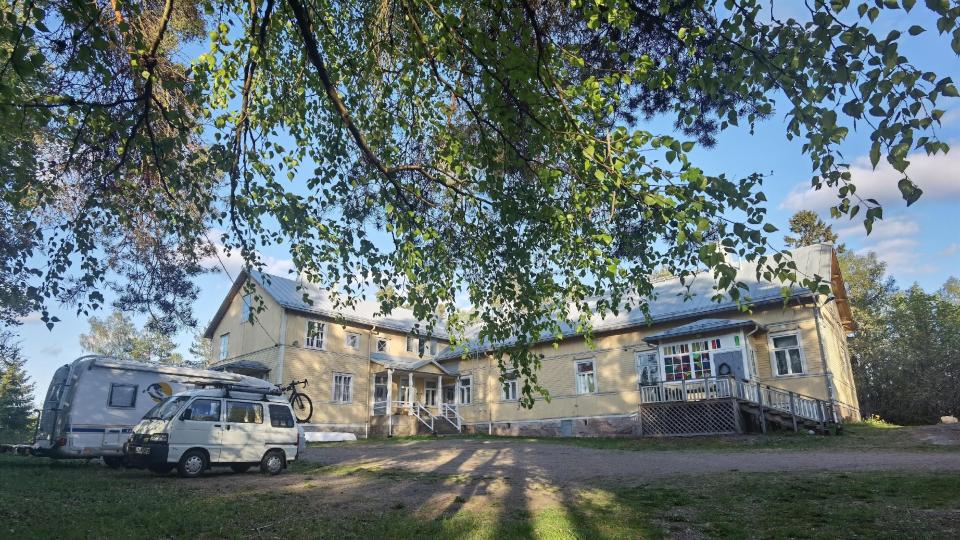
Over time, it became clear that Gamified Cohousing was no longer just an architectural project. It had become a societal experiment, testing how people behave when given agency, transparency, and responsibility over shared resources.
Technology plays a role here, but a modest one. There is no belief in “smart housing” as a silver bullet. The app used in Gamified Cohousing is not there to control residents, but to reduce friction, clarify expectations, and make invisible labor visible. Technology is chosen for robustness, openness, and accessibility, not novelty.
Having lived and worked in many political and cultural contexts, I have learned to distrust simple solutions. There is no perfect housing model, no universal blueprint, no app that fixes inequality. But complexity is not an excuse for paralysis. Systems can be made more humane, more adaptable, and more democratic.
A book on Gamified Cohousing is being drafted and it documents one such attempt. It will not be a manifesto, nor a success story polished after the fact. It will be a manual born from constraints, conflicts, failures, and lived practice. Its aim is simple: to show that housing can once again be treated as a civic infrastructure, something people actively shape together, rather than a sealed product delivered to them.
The road ahead is uncertain, and that is precisely the point. Architecture should not eliminate uncertainty; it should help us live with it. Gamified Cohousing is only a beginning, but it is a beginning grounded in necessity, not ideology.
Pedro Aibéo
Kannus, Finland
27.01.2026