
The commodification of community turns housing, shared space and belonging into market products. An essay on financialisation, cohousing and alternatives.
Gamified Cohousing transforms underused buildings
into shared living and working environments through
participatory renovation, self-governance, and adaptive reuse.
We combine private spaces, shared facilities,
and community-based management to create more
affordable and socially connected ways of living.
Rather than treating buildings as fixed products,
we develop them as evolving communities,
shaped with the people who use them.
The Gamified Cohousing app supports the daily coordination of shared living and working. It helps residents organize tasks, manage shared spaces, communicate with each other, and build transparent self-management practices. The system is being developed progressively across our projects, starting from practical tools such as cleaning schedules, shared responsibilities, and facility coordination.
Across Finland and beyond, usable buildings stand empty while housing becomes more expensive, standardized, and socially fragmented.
Gamified Cohousing responds to this by transforming underused buildings into shared living and working environments through participatory renovation, adaptive reuse, and self-governance.
The model combines private spaces, shared facilities, and community-based management so that residents can take part in the life of the building from the very beginning, rather than simply consume it. This helps reduce costs, strengthen social connection, and make better use of existing resources.
Gamified Cohousing grew out of the broader research framework of Architectural Democracy, which asks how buildings can support participation, responsibility, and more locally rooted ways of living together.
Rather than treating architecture as a finished product, we see it as an evolving process, shaped by the people who use it.
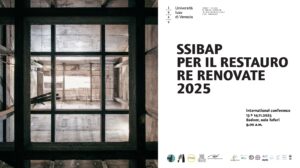
Re-Renovate is our symposium series on participatory renovation, adaptive reuse, and the future of the built environment.
Following the first edition in Oulu in 2025 and the second in Venice later that year, the symposium brings together architects, researchers, cultural producers, and policymakers to rethink how buildings can be transformed with greater social, ecological, and democratic value.


The commodification of community turns housing, shared space and belonging into market products. An essay on financialisation, cohousing and alternatives.
New construction is usually presented as the rational answer to housing needs. It appears clean, measurable, bankable, and future-oriented. By contrast, renovation is treated as sentimental, technically awkward, and financially uncertain. But this contrast is deeply misleading. What new construction often offers is not superior social, ecological, or even economic value. It offers legibility to a system built around standardisation: standard permits, standard insurance, standard finance, standard procurement, standard ownership structures.

Buildings rarely disappear with drama. They fade quietly through postponed maintenance, temporary repairs, and technical reports until renovation is declared “uneconomical” and demolition becomes inevitable. Across Finland and much of the developed world, structurally viable schools, municipal buildings, and housing blocks are routinely demolished, not because they have failed, but because renovation is administratively complex and economically uncertain.
Architect and Civil Engineer and Founder of the Gamified Cohousing
Concentrating on improving the overall performance of the company
Partnerships, and funding opportunities for Gamified Cohousing
Architect with a strong sensitivity to sustainable and urban design.
Academic & Research Institutions
Cultural & Artistic Partners
Professional & Industry Associations
Companies & Foundations
Governmental & EU Institutions
Our Own Initiatives
Gamified Cohousing operates at the intersection of architecture, governance, and community innovation, with recognition across European and global institutional platforms.